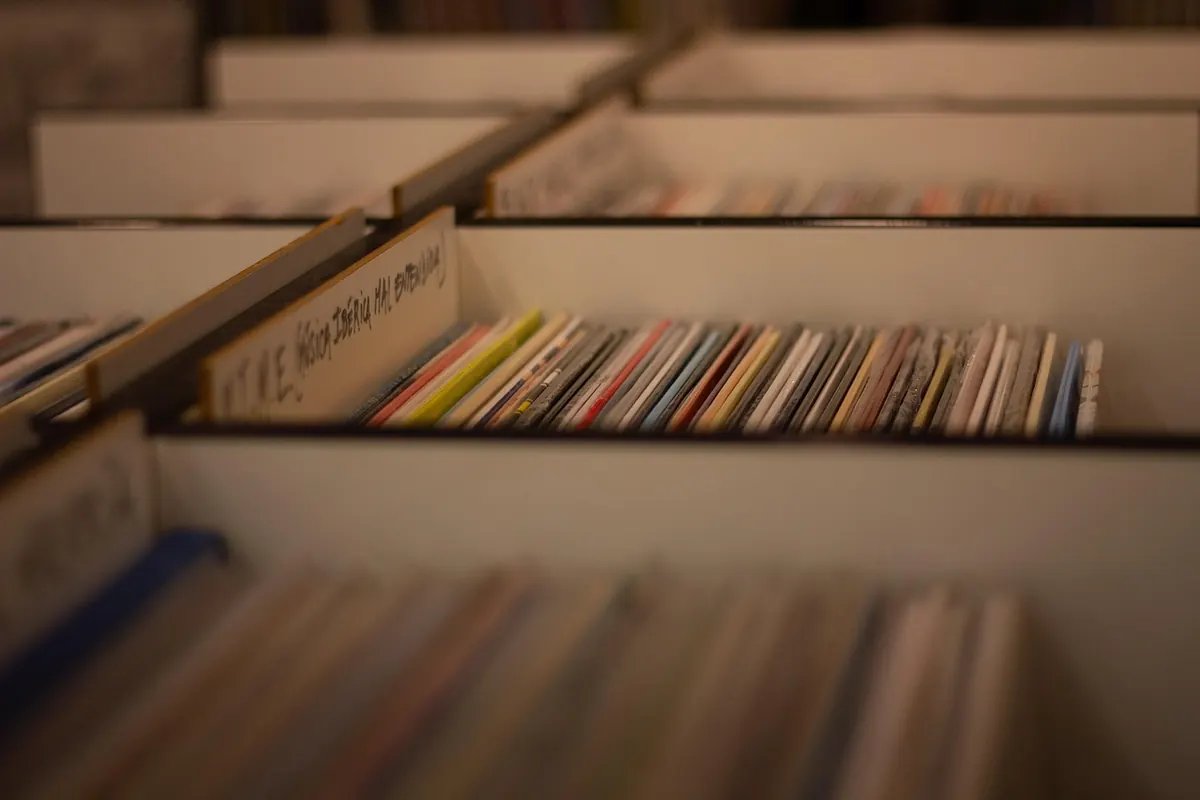
A good record shop is not a museum. The shutters go up, the kettle goes on, and somebody is already flicking through the new arrivals before the sign has been turned to Open. If you have just bought your first turntable, or you have been streaming for years and want something you can actually hold, the independents near you are the best place to start. They are also one of the last corners of music retail where a conversation counts for as much as a card reader.
What an Independent Actually Offers
Chain shops sell what is in the current catalogue. An independent sells what the person behind the counter genuinely listens to, plus whatever walked in that morning in three carrier bags. That mix — new releases, careful reissues, and second-hand stock that turns over weekly — is the whole appeal.
Staff knowledge matters more than stock size. A small shop with two thousand records and an owner who knows every one of them will beat a warehouse every time. Independents are also where you hear about gigs, local labels and the record fair happening in a church hall next month. Some run in-stores; others keep a noticeboard by the door. Treat both as part of what you are buying.
Finding the Shops Near You
Start local. Search for "record shop" plus your town, then look just outside the centre as well — plenty of independents have moved to cheaper units in suburbs, industrial estates and market halls. Ask at gigs and label nights; the merch desk usually knows. Check the noticeboards in cafés and rehearsal rooms. In bigger cities, look at the streets where music shops cluster: Berwick Street in London, the Northern Quarter in Manchester, Stokes Croft in Bristol, and similar pockets in Leeds, Glasgow, Cardiff and Nottingham. University towns often have a decent second-hand shop within walking distance of campus.
Record fairs, markets and charity shops
Record fairs are worth a morning, especially if you collect a particular genre. Arrive early for the best stock and bring cash, because not every stall takes cards. Charity shops are not record shops — nobody there can tell you whether a pressing is any good — but they are a cheap way to build a collection, and the condition is usually visible through the sleeve. Car boot sales can be better still if you are willing to look at everything.
What to Ask When You Walk In
A first visit is easier if you arrive with two or three questions and no fixed idea. Most staff would rather help than watch you circle the racks. Useful things to ask:
- Where do you keep the new arrivals, and do you have a staff picks section?
- I like this artist — what would you put next to it?
- How do you grade your second-hand records, and can I check the vinyl out of the sleeve?
- Do you have a listening post?
- Can you order something in if it isn't in stock?
- Do you buy or part-exchange collections?
- What happens if a pressing turns out to be faulty?
- Are there any in-stores or gigs coming up?
Then listen. If someone recommends a record you have never heard of, that is the point of being there. If they are mid-rush, ask when it tends to be quiet and come back then — a specialist shop will happily talk you through its corner of music once the queue has gone.
Digging Etiquette
Browsing has its own manners. Put records back roughly where you found them, or hand them to staff rather than leaving a stack on the counter for somebody else to file. Don't camp at the listening post with twenty records. When you check condition, ease the record out over the sleeve, hold it by the edges and tilt it under the light. Ask before photographing anything for a want list.
And if you use a shop to research an album you then buy cheaper elsewhere, don't expect a warm welcome next time. Nobody minds a browse; everybody notices a showroom.
Buying Well on a Tight Budget
Most independents keep a bargain section, a seven-inch box, or a shelf of records with cosmetic sleeve damage and perfectly playable vinyl. Start there. Ask what is in the cheap racks instead of assuming it is all dross — shops pull in whole collections and have to move the commons quickly. Reissues are usually cheaper than originals and often sound just as good, so if you want the music rather than the trophy, that is the sensible route. Check condition before you fall for a sleeve. A glossy cover wrapped around a scratched record is not a bargain at any price. If you are unsure about a used copy, ask for a listen before you commit.
Supporting the Scene, Not Just the Shop
Buying a record is the obvious way to help, but it isn't the only one.
- Sell or trade in your spares. Shops need stock, and a good trade-in keeps the racks interesting for everyone else.
- Go to in-stores and small gigs, even when the band is unknown to you.
- Tell them what you want. A shop can only order in what customers actually ask for.
- Pass it on. A recommendation to a friend does more than a post nobody reads.
- Be patient. If they haven't got it this week, come back next week.
A new record bought at a gig, or ordered through a local shop, tends to put more money back into music than the same record bought from a large online retailer. That is not a lecture; it is simply where the margins sit.
A Simple Plan for Your Next Saturday
If all of that sounds like a lot, keep it small.
- Pick one independent within travelling distance. Go mid-week if you can, when staff have time to talk.
- Set a budget you are happy with and make the bargain box your first stop.
- Ask one question: a recommendation, a grading policy, a special order.
- Buy one record. Even a cheap one counts.
- Go back within the month. Regulars get first look at new arrivals, and shops remember faces.
Record shops survive on people who turn up. A purchase, a question and a return visit do more for your local shop than any amount of good intentions.
Photo: niro9 / Pixabay