Two reviews sit in the same folder, share the same category tag, and are often written by the same person in the same week. They are not the same job.
An album review is a slow conversation with a fixed object. A gig review is a report on a single, unrepeatable night, filed while your ears are still ringing. Both demand precision, honesty and a point of view. But the research, the notes, the shape of the piece and the ethical pressures are different enough that a writer who is good at one can flounder badly at the other.
Research: Two Different Clocks
Album reviews reward patience. Before you write a word, listen at least four times — once for a first impression, once for the songs, once for what sits underneath them, and once with the lyrics in front of you. Change the setting: headphones on a walk, kitchen speakers while you cook, something decent if you have it. Records behave differently at different volumes, and the song you barely noticed on the bus often turns out to be the one holding the whole thing together.
Read the credits. Who produced it, who mixed it, who played what. If it is a third album, know what happened on the second. Not to write a biography, but because context changes what a record is doing — a stripped-back set of songs means something different from an artist who has just spent a decade building walls of sound.
Gig reviews run on a different clock entirely. Prep happens before the doors open:
- Stage times, doors and curfew — venues often post these on the day
- How you are getting home, including the last train
- Who to ask for if you are on the guest list, and what name it is under
- Recent setlists, as context rather than prophecy
- The singles from the new record, so you recognise them when they arrive
- A pen and a notebook as backup, because phones die at the worst moment
Treat those setlists carefully. Tours change, songs get dropped, and a review that reads like a prediction of a list you found online will age badly within a week.
Note-Taking: Headphones Versus a Dark Room
Album notes can be precise. Timestamp them. 0:42 — bass enters, everything shifts. Track four: the bridge is the best twenty seconds here. Track seven is the single whether they like it or not. Note the running order too, because sequencing is an argument the artist is making. Do not write sentences at this stage. Write triggers you can turn into sentences later.
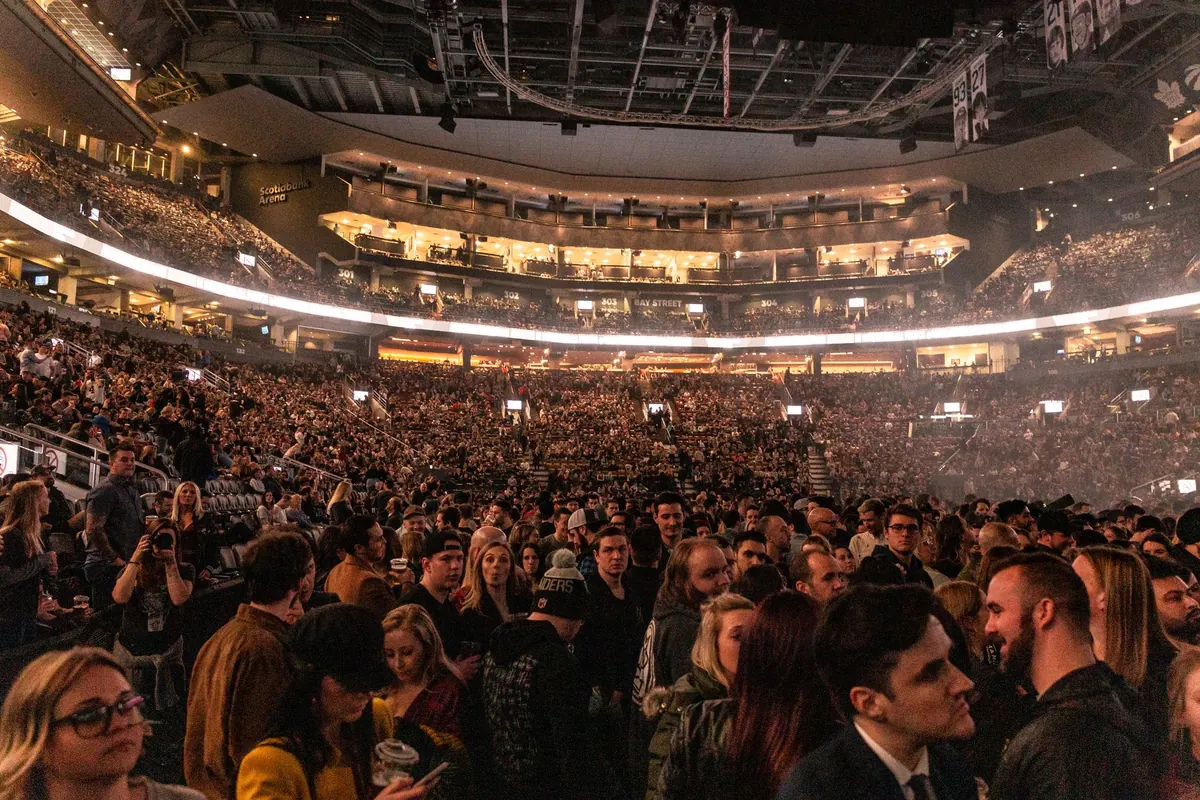
Gig notes are a scrap fight. The room is dark, the PA is loud, someone's elbow is in your ribs and the person in front is filming the entire set on a phone held above their head. Turn your screen brightness right down. Write fragments: no intro, straight into the opener. Crowd sang the whole chorus back. New one lost them for a minute, then got them back. Capture four or five moments and one honest line about the sound — muddy, brutally loud, vocals buried, surprisingly clear for a room this size.
Then put the phone away. You are there to watch. A review written by someone who spent the whole set typing is a review of a screen.
Structure: Argument Versus Report
An album review has a shape. A lede that makes a claim or lands a detail. A paragraph placing the record in the artist's catalogue. Two or three songs used as evidence. Something on sound and production if it is doing real work. A verdict that has been earned by everything before it. The temptation is the track-by-track. Resist it. The sequencing is worth a sentence or two; an itinerary of all eleven songs is not.
A review is a claim with evidence attached, not a description with a score on the end.
A gig review moves faster. Set the scene in a couple of sentences — the venue, the crowd, the mood on the pavement outside — then the set, the turning point, the encore, the verdict on the night. The setlist is scaffolding, not the building. If you list every song, you have written a spreadsheet with adjectives.
Tense is a useful discipline. Albums are permanent objects: the drums sit far back in the mix. Gigs happened: the drums sat far back until the third song, when the engineer finally found them. Both forms need a position. "It's fine" is not a review, and neither is "some will love it, others won't". A mixed review is perfectly good. A vague one never is.
Ethics: Embargoes, Guest Lists and Good Manners
On the album side
- Respect embargoes. If you have agreed not to publish before a date, that date is not a suggestion.
- Do not review a leak. You cannot verify what you are hearing, and you are building your reputation on someone else's carelessness.
- Be transparent about access — advance stream, promo copy, listening event.
- The press release is context, not copy. Rewriting it with a different opening line is not reviewing.
On the gig side
- Free entry is normal. You do not need to apologise for it, but do not soften a review because you would like to be invited back.
- If you left before the encore, say so.
- Photographers: know the rules. Usually the first three songs, no flash, out of the pit after.
- If the sound was poor, say so, and be fair about whether it was the band, the room or the engineer. Often you genuinely cannot tell. Admit that rather than guessing.
- If the artist is a friend, declare it or hand the piece to someone else.
The Practical Bits: Word Counts, Deadlines and Filing
An album review might be 300 to 500 words for a short notice, or 700 to 900 for a considered one. A gig review usually runs 400 to 700, plus the setlist if the publication wants it. Support acts get a sentence or a short paragraph — unless they were the best thing on stage, in which case give them more.
Deadlines differ more than anything else. Gig reviews are filed the same night or the next morning, because memory decays fast and the piece is worthless by the weekend. Album reviews can sit for days, and often should: a record you have lived with for a week reads differently from one you played three times in an afternoon.
File clean, so your editor is not chasing you for basics:
- Artist, title, label and release date
- Venue, city, date, and who else played
- Photographer credit, if there are pictures
- Your byline spelled exactly as you want it
Start With the One You Can Practise Twice
If you are new to this, write the gig review first. Take a show you were already going to, and the next morning write 400 words about it without being asked. You will discover quickly which parts of the night you actually remember and which you only think you do.
Then take an album you have loved for a year and write 600 words explaining why, with three specific pieces of evidence. Nobody has to publish either piece. What you are practising is the two core skills: the timestamped note and the four-fragment note. Get comfortable with both and you can cover most of what a music desk will ever ask of you.
One last thing. Read your copy aloud before you send it. Gig reviews get written at one in the morning, and one in the morning has a rhythm all of its own.
Photo: Ron Lach / Pexels